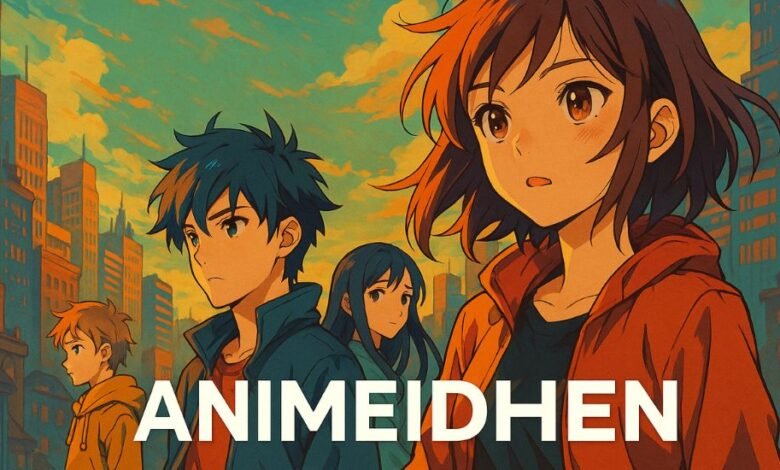
In the ever-evolving world of animation, the term “animeidhen” has begun to surface across multiple blogs and commentary spaces during 2025. Whilst not yet defined by any official anime studio or recognized as a distinct series, the term is emerging as a catch-all phrase for a new wave of anime aesthetics, creative workflows, and community-driven platforms. In this article we’ll dig into what animeidhen means, how it rose to prominence, the stylistic and technical claims behind it, the platform promises and reality check, why it’s resonating, and how creators and fans might approach it—all on the understanding that much of the discourse is speculative rather than formally documented.
Defining Animeidhen: A Concept in Search of a Definition
When you dig through blog posts and commentary about Animeidhen, you’ll quickly find a lack of consensus. Some writers describe animeidhen as an artistic movement or style within anime: the meeting point of indie creative impulses, hybrid hand-drawn and digital animation techniques, and emotionally-forward storytelling. Others present it as a platform or service—a streaming space that blends anime, user-created content, co-watching, and community creation. Still others attribute it to a kind of brand or umbrella concept aimed at defining the next stage of global anime culture.
For example, a piece published on The Crave Magazine refers to Animeidhen as “a new wave of modern anime culture” with “global indie creators rewriting the rules of the medium”. Meanwhile, another post presents it as “a streaming-platform concept founded in 2023, promising watch-parties, creator tools and thousands of titles” (though no official corporate records were found to verify this). The key take-away: animeidhen appears less a formal entity and more a buzzword in 2025’s anime commentary space.
Origins & Timeline: How Did This Term Surface?
The earliest consistent mentions of Animeidhen appear in blog entries from around mid-2025. For instance, a UK-based entertainment blog published an article on September 18, 2025, titled “Understanding this unique concept: Animeidhen”, in which the author frames it as “the intersection of identity, animation and creator culture”. Three days later, on September 22, another blog framed it as “revolutionary animation: hybrid hand-drawn/digital workflows, bold lighting, emotion-first narrative”. As the term spread, more articles followed in October.
The clustering of posts suggests that Animeidhen is being propelled less by a major studio release and more by SEO, blogger interest and indie creator fascination. Many of the articles share similar structure, vocabulary and ideas—hinting that once a few authors defined Animeidhen in a particular way, others echoed those definitions. In other words, the term may currently function more as a conceptual meme than a concrete brand or production.
Style & Technique: What Visuals or Creative Hallmarks Are Attributed?
One of the more common claims about Animeidhen is that it represents a hybrid approach to animation: combining traditional hand-drawn imagery with digital VFX, AI-assisted in-betweening, surreal color palettes, expressive lighting and emotive pacing. A blog titled “Revolutionary Animation with Animeidhen” describes it thus: “think of lush, abstract backgrounds oozing mood; characters drawn with a classical pencil-look but enhanced with digital glow; stories paced for feeling more than plot.”
Creators and commentators attribute the following characteristics to the animeidhen style:
- Hybrid drawing + digital: Traditional hand-drawn linework overlaid with CG/particle effects, sometimes AI-generated frames, suggesting a “best of both worlds” workflow.
- Bold lighting and color mood-scapes: Visually rich scenes where the medium itself is expressive—not just character movement but light, hue and ambience tell part of the story.
- Emotional, character-centric narrative: Rather than grand mecha battles, indie-style slice-of-life or introspective fantasy stories, with emphasis on internal landscapes and metaphorical visuals.
- Creator-driven/indie-leaning production: Many posts mention “global indie creators” or “the community”, as opposed to big studio productions, as driving the animeidhen wave.
While none of these claimed traits are unique in anime history, the combination (hybrid technique + indie ethos + mood-first storytelling) is posited as what makes Animeidhen distinct.
The “Platform” Angle: Promise vs Reality
A number of blog posts also present Animeidhen as more than a style—they describe it as a platform, label or streaming service. One post claims it was “founded in 2023” and offers features such as co-watch parties, creator upload tools, and a curated catalogue. Another describes it as an “immersive community hub for the next generation of anime fans and creators”.
However, on inspection, these claims lack concrete verification: no official website, no press release from major studios, no trademark filing discovered. That suggests one of two possibilities:
- The “platform” version is aspirational or metaphorical: fans or bloggers projecting what Animeidhen could be.
- The blog wave is part of an SEO/marketing experiment, rather than an organically developed brand with heavy infrastructure.
For your article, it’s worth noting this bold pitch and the caution: treat platform claims as unverified. The real traction may lie in cultural discourse rather than a corporate product.
Etymology & Name-Theory: Why “Animeidhen”?
One recurring curiosity is the unusual word “animeidhen”. Several blogs offer speculative etymologies:
- One idea: “anime” + “hidden” -> animeid-“hen”, signifying hidden or underground anime.
- Another: Borrowed from “Éidhen” (a term meaning ivy or entwined growth in a mythic sense), suggesting “anime that intertwines global creators, styles and tools”.
- Some authors simply treat it as a coined term designed for novelty.
None of the posts provide a peer-reviewed linguistic analysis or cite an original creator of the term. That suggests the name is constructed for effect, rather than deriving from a traditional anime term or language root. In your article, you can present the etymologies as interesting commentary but highlight the lack of authoritative source.
Why It Resonates — Cultural & Technological Context
Despite the ambiguity, the Animeidhen concept is capturing interest—and here are some reasons why:
- Indie anime / creator tool surge: With tools like free animation software, AI-assisted workflows, and live-streaming creation, more individuals worldwide are making anime-style work. The concept of “animeidhen” taps into this grassroots moment.
- Globalization of anime aesthetics: Anime no longer flows strictly from Japan; creators across the world are mixing styles, motifs and production methods. Animeidhen portrays a global-first identity.
- Hybrid art trends: Across media we see a blending of hand-drawn, 2D, 3D, AI-enhanced visuals. Animeidhen locates itself at the intersection of that trend.
- Community & co-creation: The notion of fans participating, creators releasing shorter works, watch-parties, experiments—this aligns with modern media consumption and fandom behaviour.
- Desire for novelty: With the anime market saturated, the idea of a “new wave” concept is appealing. Animeidhen offers a narrative of freshness and innovation.
In short: even if the brand or platform isn’t fully defined, the idea of Animeidhen resonates because it reflects current shifts in how animation is made, shared and consumed.
A Reality Check: What to Be Careful About
If you’re writing critically, here are some caution flags to highlight:
- No verifiable primary source: There’s no official website, no major studio release branded “Animeidhen”, no public company behind the term (as of this writing).
- SEO/copy-echo patterns: Many blogs from Sept-Oct 2025 share very similar vocabulary, structure and claims—suggesting a wave of imitation rather than organic growth.
- Ambiguity of “movement” vs “brand”: Because the term switches between style, platform and movement, it lacks a fixed meaning—this can confuse readers if you don’t explain the ambiguity.
- Potential hype vs substance: Some blog posts make bold claims (“thousands of titles”, “founded in 2023”, “AI-animated in hours”) that lack supporting evidence—use these as interesting but scrutinised claims.
- Lack of concrete examples: Unlike established concepts where you can point to flagship titles or creators, for Animeidhen you don’t yet have a widely recognised “must-see” work labelled under it.
Mentioning these in your article will strengthen its credibility.
Implications for Creators & Fans
If you’re a creator or a fan thinking about Animeidhen, here are some implications:
- Creators: If you’re producing anime-style works, you could treat “animeidhen” as a conceptual label—experiment with hybrid methods (hand-drawn + digital/AI), embrace community co-creation, global perspectives, emotionally driven narratives. It might be a marketing hook.
- Fans: You might keep an eye out for works described as “animeidhen” to get early-wave indie anime experiments. But treat claims with curiosity—just because something uses the label doesn’t guarantee a quality threshold.
- Platforms/Distributors: If you run a streaming service or community site, you might explore “animeidhen” as a thematic brand for curating indie anime showcases, creator-led short-form works, crowd-co-creation events.
- Researchers/Analysts: The term illustrates media-culture’s rapid cycle: how a term can emerge via blogs and SEO interest, even ahead of formal brand establishment. Watching how it evolves (or fades) could be instructive.
What the Future Might Hold
Looking ahead, here are a few possible trajectories for Animeidhen:
- Growth as a community/label: It could become a recognised micro-label or anthology series, where independent creators submit works under the “animeidhen” banner.
- Adoption by a major studio or platform: If a streaming service or production company picks up the term, gives it official branding, we may see “Animeidhen Originals” or similar.
- Fade into obscurity or re-branding: Because the term is speculative and loosely defined, it might fade or be replaced by another buzzword.
- Expansion into multiple media: It might evolve to include VR-animation, interactive stories, game-hybrid anime and more, using the “animeidhen” label as a flexible umbrella.
For readers and creators, the key is: monitor how the term solidifies (or doesn’t) and watch for concrete works, platforms or studios that adopt it.
Conclusion
In summary, Animeidhen is an intriguing notion at the intersection of anime, indie creator culture, hybrid animation technique, and community-driven media consumption. While it lacks a single canonical definition or an established “brand”, it reflects a meaningful shift in how animation is created and consumed in 2025. For those interested in the future of anime—its tools, its business models, its global community—animeidhen is a concept worth watching.
If you’re looking to write about it, you can frame it as a movement under construction, present both the hype and the realities, and treat “animeidhen” as a lens through which to view broader changes in animation culture. This article was researched and presented for ScrollBlogs.