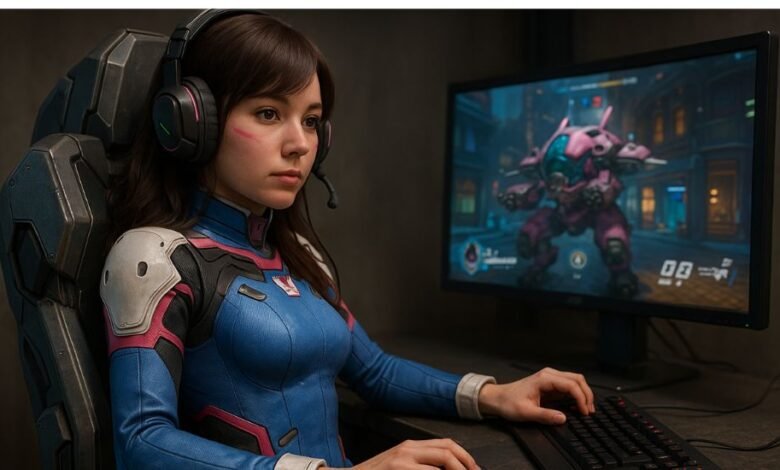
The phrase “D.Va is trans lmfao” has traveled an unusual path through gaming spaces—beginning as a scattered meme, evolving into a niche fandom theory, and eventually becoming a recurring joke, debate topic, and cultural talking point. Although Overwatch’s developers have never stated that the Korean mech-pilot Hana Song (D.Va) is transgender, the idea persists in humorous posts, speculative lore discussions, and social media threads.
Why does this phrase exist? How did it catch on? And what does it say about modern internet culture, LGBTQ+ representation, and community-led reinterpretation of fictional characters?
This article examines the origins, spread, and impact of the meme, the cultural dynamics that fueled it, and why fans continue to reference “D.Va is trans lmfao” even years after it first appeared.
1. The Origins: A Meme Before a Theory
The earliest appearances of the phrase “D.Va is trans” can be traced to message boards around 2016, right after the launch of Overwatch. One notable thread on GameFAQs titled “DVA is the trans” shows users jokingly prompting others to imagine new lore twists in Blizzard’s newly released shooter. The tone was not serious—more of a chaotic, humor-driven suggestion in the spirit of classic forum banter.
As memes do, the idea mutated.
By the time Reddit and Tumblr communities picked it up, the meme had shifted from a throwaway forum joke to a playful headcanon. Fans began merging modern identity discussions with the Overwatch roster, often creating gender-bent art, trans-flag recolors, and alternative storylines for characters’ backgrounds. D.Va, being one of the youngest and most culturally iconic characters in the game, naturally attracted a large portion of this attention.
But memes rarely stay in one place. They evolve with each new environment they inhabit.
On Twitter (now X) and TikTok, “D.Va is trans lmfao” became not just a theory or joke, but a piece of internet-cultural shorthand—representing the joy of remixing established canon, embracing fan interpretations, and playfully resisting the seriousness of official lore.
2. The Lore Spark: A Single Line of “Encrypted” Dialogue
Interestingly, one small piece of Overwatch lore unintentionally added fuel to the fire:
In one of D.Va’s character files, there’s a line that reads:
“Unconfirmed reports that D.Va is (ENCRYPTED).”
Fans immediately latched onto this.
Because Blizzard has created LGBTQ+ heroes in the Overwatch universe—like Tracer and Soldier: 76—some players wondered if this encrypted detail hinted at another queer character reveal.
In reality, this is almost certainly a placeholder line or a narrative tease with no explicit meaning.
But to meme culture?
It was a gold mine.
For people already saying “D.Va is trans lmfao,” the encrypted line became an inside joke, a “see?!” moment, and a free ticket to extend the meme’s lifespan. On the Blizzard forums, threads popped up dissecting the line, asking whether it implied gender identity, military records, or something entirely unrelated.
This didn’t create the meme.
But it validated it for many fans—and provided a pseudo-lore hook for a joke that otherwise lived outside canon.
3. Why D.Va? Why This Meme? Understanding Fandom Culture
Memes don’t become widespread without cultural and psychological reasons.
So why did this one resonate?
a. D.Va’s Popularity and Memeability
D.Va is:
- Young
- Tech-savvy
- A gamer
- A live-streamer
- Brightly colored, expressive, and meme-friendly
Her entire character design encourages energetic, playful reinterpretation.
People love turning characters like her into vessels for creativity—whether serious or humorous.
b. The Rise of Identity-Driven Fandom Spaces
During the 2010s, fandom culture underwent a shift:
- More LGBTQ+ representation
- More openness about gender identity
- More fanfiction, fanart, and headcanon diversity
Assigning trans identities to characters—sometimes seriously, sometimes jokingly—became a form of participatory storytelling. For many trans fans, it was empowering. For others, simply funny or absurd.
“D.Va is trans lmfao” sits directly at the intersection of:
- sincere identity discourse
- chaotic meme humor
- and fan-created lore
c. The Meme’s Structure: A Perfect Balance of Chaos and Clarity
The phrase itself is chaotic in a distinctly modern internet way:
- “D.Va is trans” – a complete, declarative statement, bold enough to provoke discussion.
- “lmfao” – immediately defuses seriousness, signaling humor.
This combination allows the meme to operate in multiple modes:
half-joke, half-sincere, half-chaos—a triple structure that only the internet could produce.
4. How the Meme Spread: Platforms and Subcultures
The meme gained traction at different speeds on different platforms.
a. Tumblr & DeviantArt: The Headcanon Factories
Here, users crafted:
- Trans D.Va artwork
- Alternate universe stories
- Fanmade character redesigns with trans flag colors
These posts helped normalize the meme’s presence in fan spaces.
b. Twitter / X: The Chaos Multiplier
Short text, low stakes, and rapid sharing = meme fertilizer.
Tweets like:
- “dva is trans lmfao stay mad”
- “I’m not saying she is but also yes she is”
…circulated widely, adding humor to the theory and attracting both supporters and confused newcomers.
c. TikTok: Visual Culture Takes Over
Creators posted:
- Cosplays
- Edits
- Joke animations
- “POV: You discover D.Va is trans lmfao” trends
This platform added visual flair and pushed the meme into younger communities.
d. Blog Articles and Meme Breakdowns
Sites like WoolRec published explainers to decode why the phrase existed, confirming that the meme had become mainstream enough to merit documentation.
5. Is There Any Evidence? The Canon vs the Meme
Canon Says: No, D.Va Is Not Trans
Blizzard has never:
- confirmed
- hinted
- suggested
- or implied
that D.Va is transgender.
While the Overwatch universe does feature queer characters, they have made no official statement about D.Va’s gender identity.
The Meme Says: “D.Va Is Trans LMFAO” Anyway
And that’s the point.
The meme does not need canonical approval—it thrives on humor, fan freedom, and the collective remixing of pop culture.
The meme’s power lies in its playfulness, not its accuracy
6. What the Meme Says About Internet Culture
The rise of “D.Va is trans lmfao” reflects how fandom has changed in the digital age.
a. Memes as Modern Folklore
Internet culture creates its own myths:
- “Luigi is dead”
- “Sans is Ness”
- “Kirby is a god”
“D.Va is trans lmfao” fits into this tradition—part joke, part fanfiction, part cultural moment.
b. Community Identity-Building
For trans gamers, the meme has sometimes been used sincerely as a form of representation.
For non-trans gamers, it often remains a humorous exaggeration.
This dual usage keeps the meme balanced between joke and identity statement.
c. Resistance Against “Lore Police”
Overwatch has a very strict and elaborate canonical universe.
The meme’s chaotic nature acts as a rebellion against rigid storytelling.
It says:
“We can make our own narratives, even if they’re absurd.”
7. The Backlash and the Support
Like many identity-related memes, reactions vary.
Supporters say:
- It encourages representation.
- It’s just harmless fun.
- It celebrates fan creativity.
Critics say:
- It “breaks” the established canon.
- It’s baseless or forced.
- It confuses new fans.
But this conflict is inevitable—any meme that touches identity, fandom, and lore will spark debate.
In reality, the meme is neither activism nor propaganda.
It’s just internet culture doing what it does best: creating chaotic, humorous interpretations for entertainment.
8. Why the Meme Still Matters Today
Despite originating years ago, the phrase continues resurfacing.
Why?
a. Overwatch’s Staying Power
As long as D.Va remains:
- popular
- marketable
- memeworthy
…people will continue attaching memes to her.
b. The Meme Is Flexible
It can be used:
- jokingly
- sincerely
- ironically
- confrontationally
- affectionately
That versatility keeps it alive.
c. The Identity Culture of Modern Fandoms
Today’s fanbases are deeply influenced by discussions of:
- gender
- sexuality
- representation
- authenticity
- inclusivity
This makes identity-based memes more engaging than ever.
9. A Case Study in Meme Evolution
“D.Va is trans lmfao” is an excellent example of how memes evolve:
- Origin – a joke on a forum
- Mutation – fanart and headcanon adopt it
- Spread – social platforms amplify it
- Validation – a tiny lore detail fuels speculation
- Normalization – creators reuse it as a recurring bit
- Documentation – blogs and explainers analyze it
- Longevity – fandom cycles keep it alive via humor and identity
It is not a groundbreaking political movement.
It’s not a lore-changing theory.
It’s a community-generated cultural artifact, sustained by humor, relatability, and the internet’s love of chaos.
10. Conclusion: The Cultural Life of a Meme
At its core, “D.Va is trans lmfao” is not about proving anything.
It’s not about rewriting canon or forcing identity on a character.
It’s about celebrating the internet’s ability to remix media endlessly.
It is:
- playful
- chaotic
- identity-friendly
- creatively empowering
- culturally interesting
Whether taken as a joke, a headcanon, or a form of representation, the phrase embodies what modern fandom does best—transform established characters into springboards for humor, self-expression, and community connection.
Memes like this show how fans shape the stories they love, often in ways that are funny, surprising, or even nonsensical. And sometimes, those interpretations take on lives of their own—lasting years beyond their original context.
As long as the Overwatch fandom remains active, the phrase “D.Va is trans lmfao” will likely continue resurfacing, referenced with a wink, a laugh, or a sincere nod—depending on who you ask.
Article published on: scrollblogs